
Governor 2026-27
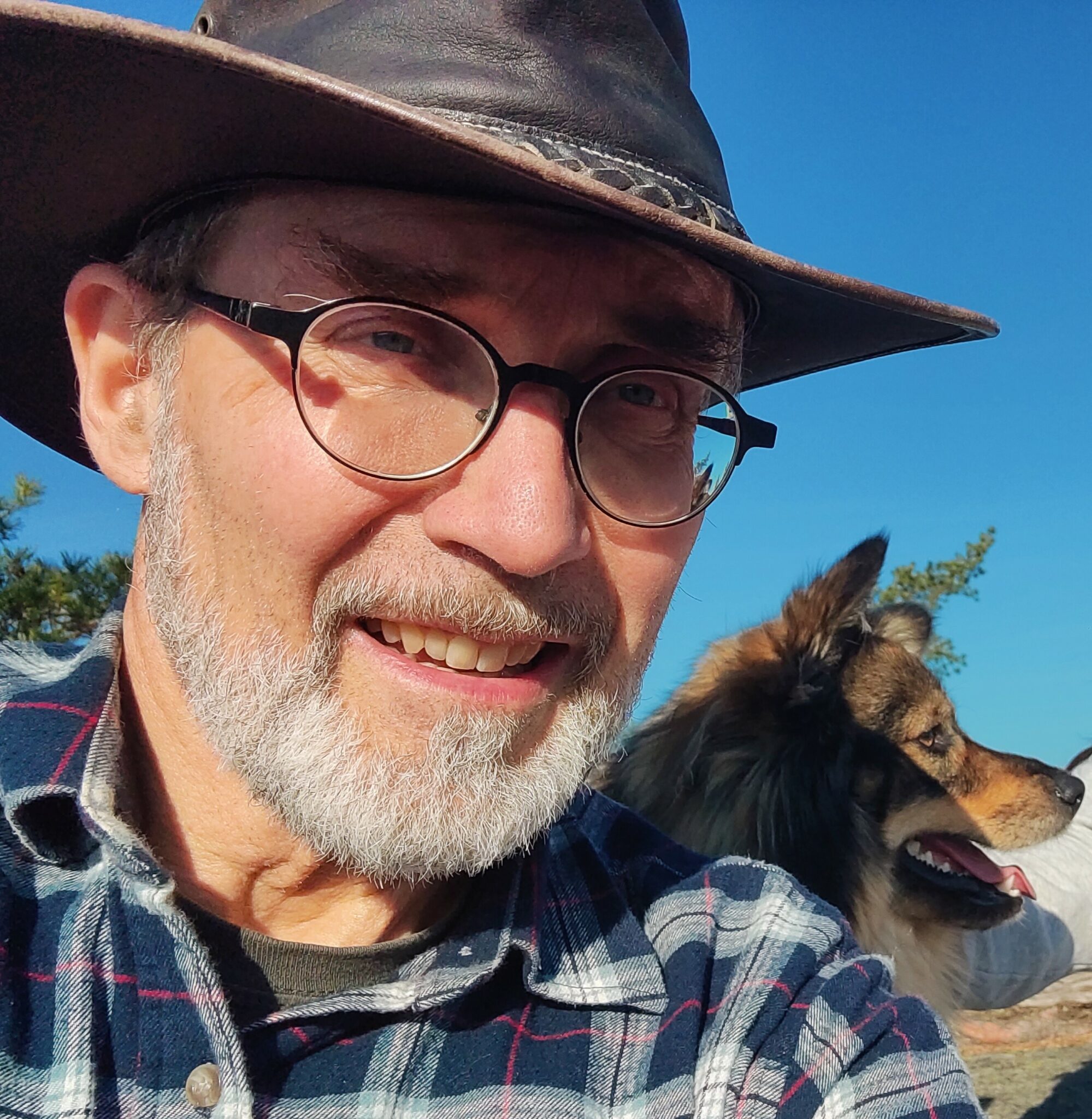
DG Sakari Alaranta
Governor
Lieto Vanhalinna RC
health care/drug development
Mobile +358 405 514 251
E-mail: sakari.alaranta@elisanet.fi
The 2026–2027 governor profile was compiled based on an interview. The following 10 questions highlight Governor Sakari Alaranta’s responses regarding himself as a person as well as his involvement in Rotary.
1. How would you describe yourself?
I’m a pretty curious observer and a deep thinker, and I want to understand the “why” and “how” behind the things that are close to my heart. I enjoy joking around and telling stories. Deliberate stupidity and injustice really get under my skin. I’m a Stoic in the sense that I don’t worry about things I can’t influence, but I feel a duty to take action on issues that can be fixed—and in those cases, you might even call me recklessly brave. As a young man, I would have said that the things most important to me are music, friends, pranks, studying, working with my hands, endurance sports, and nature. Now, instead of nature, I say “the environment,” which I want to understand in a broad sense. Those close to me consider me quite resourceful, tenacious, analytical, and, to some extent, a go-getter. I assess the feasibility of ideas fairly quickly and without prejudice, and I can be impatient when things don’t move forward. I’m a deeply emotional person. I find joy in every success that involves effort, and that’s why I want to keep things moving forward. As I’ve gotten older, helping others, spending peaceful time with my loved ones, being out in nature, and working with my hands have become increasingly important to me.
2. What made you decide to join Rotary?
For quite some time, I’d been thinking about getting involved in charitable and service work through an organization. I had been very active in Scouting in the Helsinki metropolitan area since I started elementary school, and after we moved to Kaanaa in Raisio in 1995, I became involved in the local village association. In 2010, my friend and colleague Seija Aimo invited me to join the Lieto Vanhalinna Rotary Club. I decided to join after attending a few club meetings. The club’s activities exuded goodwill, a willingness to help, and a forward-looking spirit, and the membership consisted of men and women of various ages without any distinction between “female” or “male” presidents. I found this setup to be very liberating and a healthy foundation for achieving the goals of doing good.
3. What do you consider to be the most important duty of every Rotarian?
The answer comes directly from Rotary’s ideal: “Service Above Self.” Every Rotarian must personally work toward achieving this ideal and make Rotary’s values their own personal tools.
4. What do you think makes a club effective?
An effective club is a fun place to be. Members respect one another and use Rotary’s values as their guiding principles. In an effective club, a member’s gender, race, religion, or political views are never a factor.
Members eagerly look forward to club meetings and to meeting other Rotarians at other Rotary events as well. The club is committed to learning and looks outward and ahead, and its members understand the importance of The Rotary Foundation. The club understands the opportunities and needs of its community, which leads to the implementation of its own service projects and participation in other projects according to its resources. The club prioritizes projects based on its resources and the importance of the project, not on whether the recipient is near or far.
5. Year as governor has only just begun, and there are still many discussions and meetings ahead, but has the role of governor been what you expected?
It has been very much what I expected—and much more: rewarding and educational encounters, and purposeful work toward a better future. To ensure I have peace of mind and time to recharge, I’ve given up all my previous regular commitments for the duration of this term, and that has been a good decision. In the “more than I expected” category, I must note that while I expected a spirit of mutual service from the district organization, the support I’ve received from the District Council and other district officers has been truly touching and constructive.
6. Future governors receive extensive training for their roles—please mention a couple of highlights from your journey.
The first Action Summit event on the Governor’s Path in Malmö was impressive in many ways. The atmosphere was enthusiastic, it was fun, and the interactions among the trainees and other participants were genuine and constructive. There was no non-Rotary “fluff” in Malmö. The Rotary spirit was also very much in the air in the local community. I believe that the experiences in Malmö played a part in my wife Sirkku’s decision to become a Rotary member. That makes two already, but I’ll add one more. At the training in Orlando, I met several future governors from politically or otherwise unstable regions. It was deeply moving to see how the Rotary community serves as a safety net in their daily lives, where Rotary’s principles and values are brought to life.
7. What do you think are Rotary’s biggest challenges?
When looking at the world, one cannot help but think that Rotary faces major challenges, especially in places where prosperity is greatest. Rotary’s ideals and values remain relevant; they have not lost their meaning. We must not stray from them. The greatest challenge comes from people themselves—from selfishness and prejudice. This is evident, for example, in the Nordic countries in the culture of donating to the Rotary Foundation. Overall, donations are low; giving is not seen as personally important, and there is a certain prejudice against it. Value-based Rotary activities must keep pace with the times. Clubs must recognize that we must not create traditional rules that prevent the ideal of service from being realized. The ideal cannot be realized without an outward focus. Traditions that hinder action have very little to do with Rotary.
When examining Rotary activities on a global scale, one cannot help but notice that people are attracted to a certain kind of Rotary elitism and living in a Rotary bubble in ways that are not in line with Rotary’s principles (for example, high membership fees, clubs based on social status, and clubs that accept only members of a single gender).
I consider the internalization of Rotary’s values to be a challenge—but one that is very surmountable. The effort to live in accordance with these values applies to every Rotarian and every club. There is room for growth.
8. How can we overcome these challenges?
We need to talk about Rotary’s values. Integrity is an extremely important value. In my opinion, new members should not be given the Rotary pin unless a discussion about values has taken place and a commitment has been made to strive to live by those values. When several Rotarians participate in the discussion, everyone is prompted to engage in healthy self-reflection.
Everyone must be aware of and take responsibility. We often hear that taking action and bringing about change is the domain of younger members. In my opinion, challenges are best overcome when everyone participates.
I believe that everyone can learn. If not through reason, then through emotion. We must view the entire world as our field of action, while still understanding our own capabilities and resources. Good examples of successful projects—regardless of their focus—can inspire even a Rotarian who has previously supported only local initiatives.
9. What areas do you want to highlight during your term?
* It benefits every club to strengthen its own identity in a way that is also visible to the outside world.
* Internalizing our service mission and understanding our operating environment are part of strengthening our identity.
* We cannot achieve a sustained increase in membership without impactful activities centered on impactful projects carried out with the foundation’s support. We improve our impact by working together.
* This year’s theme, “Create lasting impact,” is apt and nicely incorporates an emotional component. I am certain that people decide to join—and subsequently remain members—primarily based on the impact of our projects, not just because the club offers interesting presentations.
* The club’s identity definitely includes the fun of Rotary activities, which comes in many forms. That sense of fun arises naturally when we’ve accomplished something truly meaningful and heartwarming.
* Participation in events and training sessions organized by the district. Meeting other Rotarians is empowering and enjoyable, and participation strengthens the club’s expertise.
* Rotary’s diversity and international scope. Rotary offers an incredible array of opportunities. While the club is the core of our activities, each Rotarian can personally build upon their club involvement by joining various activity and interest groups based on their preferences and expertise. It’s worth checking them out. I’m a member of the Rotary Malaria action group, officially known as Rotarians Against Malaria Global (RAM-Global), which focuses on combating and eradicating malaria worldwide. There are about 120 interest groups in Rotary. I’m also part of the whiskey tasters and birdwatchers, and as a knitter, I plan to join the creative crafts group as well.
10. Three Top Tips on Your Term for Presidents
* Do something (preferably in collaboration with another organization, such as another club or group) that has an impact lasting beyond the Rotary year, resonates with members, and attracts new members. This is how you create continuity. If you can’t come up with your own idea, reach out to others and ask to join in. As a suggestion, I’d recommend the “Rotary in Finland for at least 100 years” activities, which our district will be promoting to clubs throughout the fall.
* Delegate tasks, involve others, and get involved yourself! Projects are the responsibility of the entire club—in practice, they should be led by members other than the president and the board. Bring your club’s members to district and other Rotary events—not just you and the secretary.
* Think for yourself, be bold, and engage with your club members! You’re surely fair and honest. So take a critical look at your club’s practices and consider whether you’re acting in accordance with Rotary’s ideals and values. Make adjustments as needed. The district, along with the AG and DG, is here to help.
Talk at least once with members you haven’t spoken to before. Come up with something harmless and fun that you can do together. Why not wear funny hats to the fall seminar and district conference? You don’t need to ask for permission, and don’t worry if someone happens to disapprove.
