
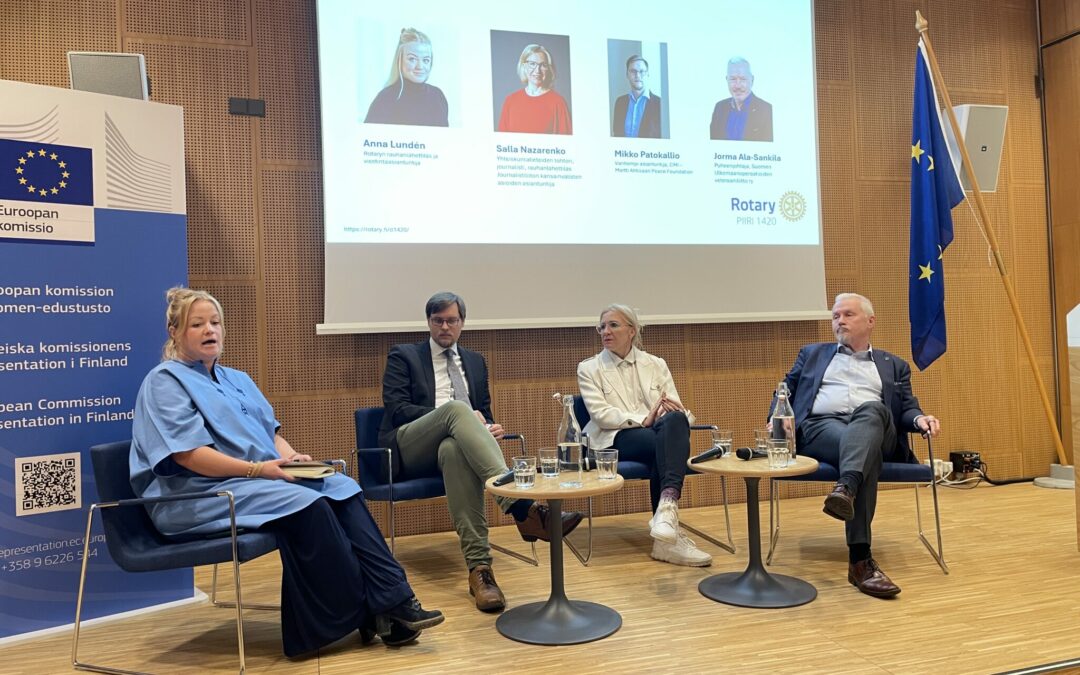
As discussions about war and preparedness intensify, it is important to make room for discussions about peace as well. What does peace mean, how is it safeguarded, and how is it negotiated? Promoting peace is one of Rotary’s focus areas, and for this reason the Rotary clubs of Central Helsinki organized a Peace Evening on 27 October.
Our District Governor, Heldur Allese, opened the event by highlighting the importance of peace and the need to maintain continuous dialogue among all parties.
The speakers included:
- Kirsi Henriksson, Deputy Head of EU Civilian Crisis Management Operations
- Anna Lundén, Rotary Peace Ambassador and communications and development expert
- Salla Nazarenko, journalist and Rotary Peace Ambassador
- Mikko Patokallio, Senior Expert, CMI – Martti Ahtisaari Peace Foundation
- Jorma Ala-Sankila, Chair of the Finnish Association of Veterans of International Operations
Kirsi Henriksson provided a valuable overview of the long-term nature of peacebuilding and emphasized the importance of starting peace efforts even while conflicts such as the war in Ukraine are still ongoing. Participants also gained a better understanding of the scale of the EU’s current operations and the hundreds of people working on the ground. Civilian crisis management covers a wide range of tasks, including support for local authorities. While these operations are costly and their funding is continuously discussed within the EU, Kirsi reminded the audience that such costs are insignificant compared with the costs of war or military preparations. Finland alone spends almost €7 billion on defence.
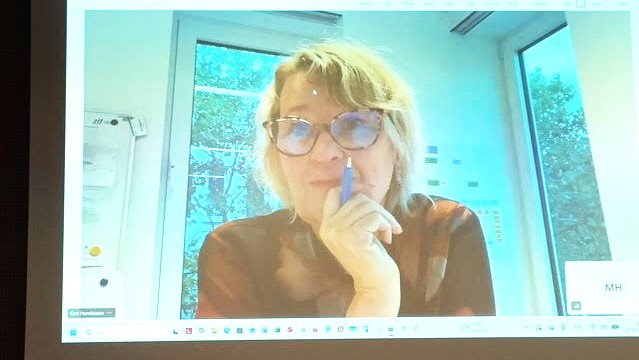
Kirsi Henriksson directly from Brussels remotely
Anna Lundén and Salla Nazarenko shared their experiences from Rotary Peace Center studies, Anna in Uganda and Salla in Bangkok. Both highlighted the value of building international networks with fellow students from different countries and broadening their understanding of the world. Anna also emphasized community-based peacebuilding, drawing on her experiences while completing her final project in the slum areas of Makerere. Both stressed the importance of involving young people in peacebuilding and bringing together civil society organizations committed to peace.
Mikko Patokallio gave a comprehensive overview of the stages of peacebuilding required to achieve post-conflict stability. This work continues throughout a conflict, not only afterwards. He summarized the key elements in five points: 1) building trust, 2) inclusive peace, 3) implementation of agreed measures, 4) taking the right actions at the right time with the right people, and 5) creating sustainable societal solutions. Coordination among various actors and organizations plays a crucial role throughout the process.
Jorma Ala-Sankila highlighted Finland’s 70-year history in military peace operations. This work began with the Suez Crisis in 1955 and has since seen more than 55,000 Finnish peacekeepers serve in different countries and missions. Their role is most often to monitor ceasefires or existing peace agreements, with a strong focus on civilian protection and overall regional security. Finnish peacekeepers are known for their high level of education, initiative, reliability, and low hierarchical culture.
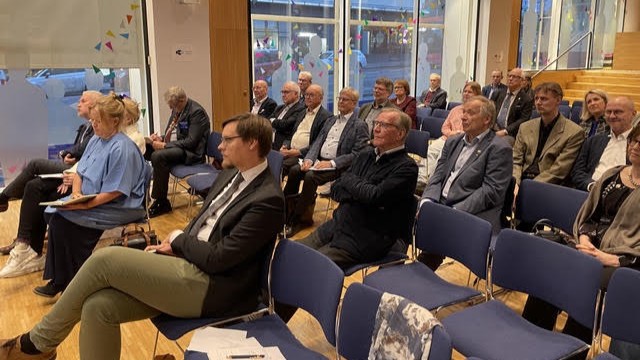
The event concluded with a panel discussion featuring all speakers, moderated by Mika Helenius. Audience members were also able to ask questions. In closing, the panelists summarized what Rotarians can do to promote peace: remain open-minded, get to know people from different backgrounds, avoid isolation and polarization, maintain diverse discussions about peace, encourage dialogue between generations, and actively work to advance peace.
Thank you to all the speakers and the engaged audience.
The proceeds from the event will support leisure and hobby activities for Ukrainian youth living in Finland.
Text: Tarja Uitti, Finlandia Hall RC
Photos: Tarja Uitti and Juha Artukka, Finlandia Hall RC
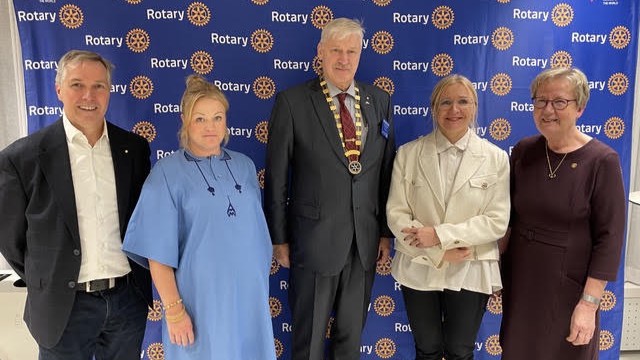
Mika Helenius, Anna Lunden, Heldur Allese, Salla Nazarenko and Tarja Uitti
